Interview: Nihaarika Negi by Poulomi Das
After attending Berlinale Talents in 2021, writer-director Nihaarika Negi returns with “Tenfa,” her debut short, which premiered at the Indian Film Festival of Los Angeles (IFFLA). Set in a remote Himalayan village, the film blends magical realism, archival footage, and participatory storytelling. It follows a midwife navigating a life-threatening childbirth, forced to rely on intergenerational, women-held knowledge systems to save a life.
We caught up with Nihaarika to talk about her evolving practice, the deeply personal origins of “Tenfa,” and what it means to tell stories rooted in land, memory, and community.
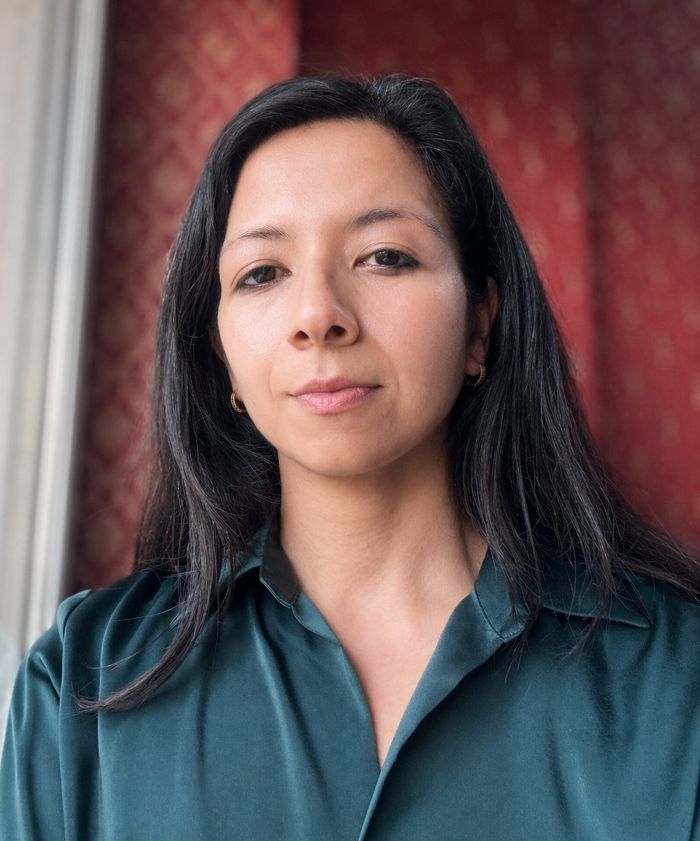
This interview was conducted by Poulomi Das, another Berlinale Talents alumna who was selected for Talent Press in 2019.
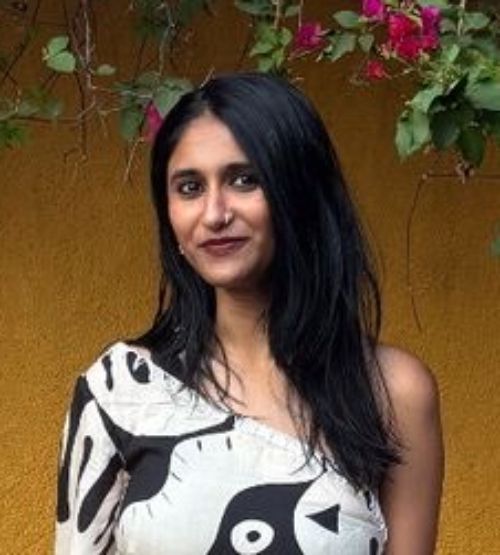
It's been five years since you took part in Berlinale Talents. What, from that experience, has stayed with you in your practice?
When you work within a particular filmmaking context, you begin to absorb its assumptions and language, which can easily become preconceptions over time. Berlinale Talents shakes that. Being part of a cohort of artists from over 90 countries, all questioning cinema in different ways, pushed me to rethink what the medium can do. That practice of asking hard questions and returning to first principles every time you create, has stayed with me.
Your work moves between the intimate and the mythic, drawing on folklore, performance, and magical realism. How do you navigate that balance between lived reality and imaginative storytelling?
Growing up, folklore and mythology existed alongside everyday life, and storytelling often felt inherently performative. These stories opened up imaginative spaces to access something beyond words, something ancient. Filmmaking, for me, is an attempt to make that perspective visible. I try to stay true to that search and use cinematic tools to create space for it.
Since being part of Berlinale Talents, your work has continued to move across forms, from XR to film to performance. How has your practice evolved in the years since, and what directions have you been most interested in exploring?
My practice sits at the intersection of embodied movement, live art, and contemporary performance, exploring how new forms of thinking and making can emerge across disciplines. Film, being inherently interdisciplinary, feels like a natural medium to ask these questions. Lately, I’ve been interested in how filmmaking can hold elements of liveness, inviting unpredictability, whether through nature, duration, or chance. Since 2021, I’ve explored these ideas through “Tenfa” and my first co-directed feature “Birds of a Feather”, shaping what feels like an evolving pedagogy of my obsessions.
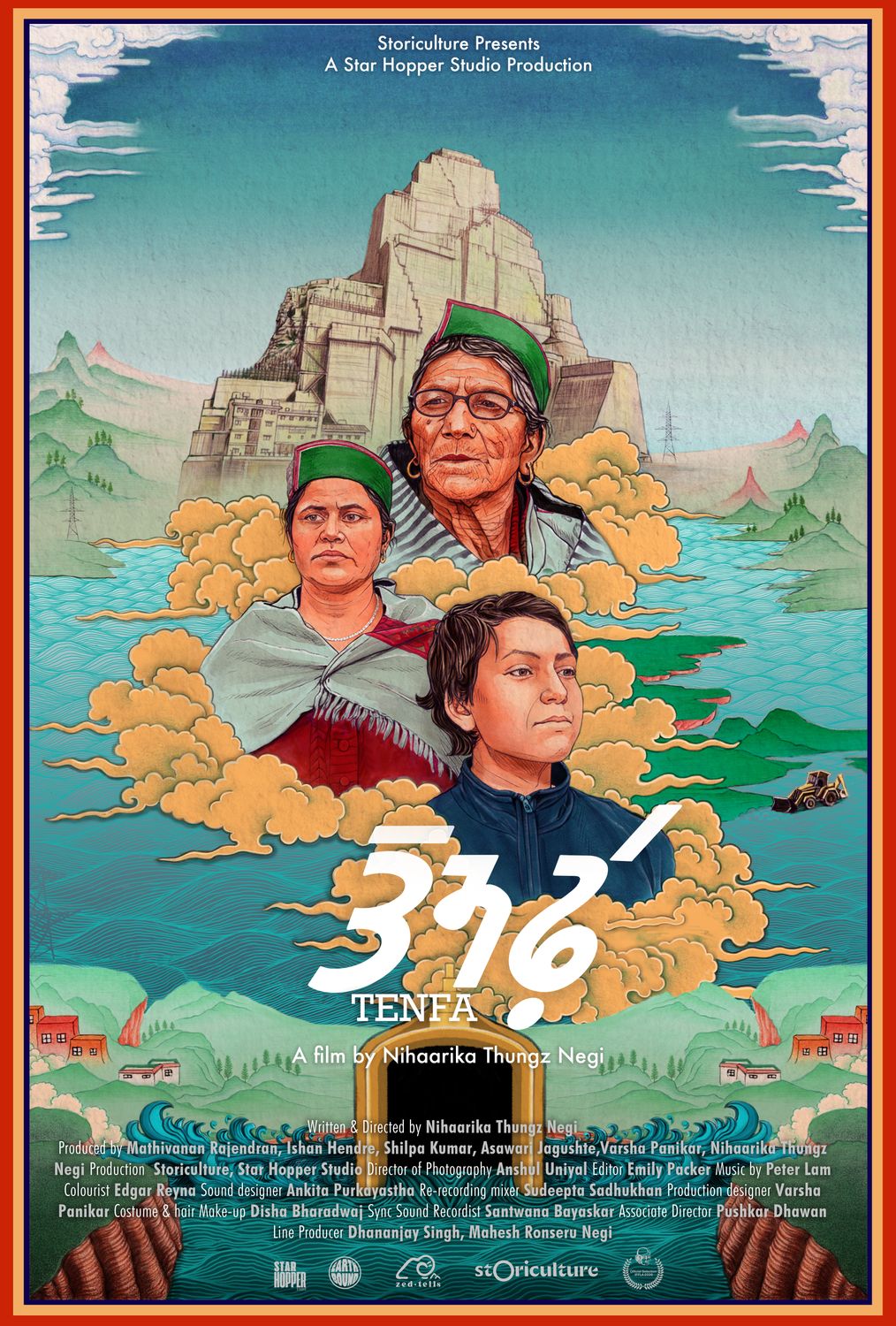
“Tenfa” draws from your family history, particularly your aunt working as a midwife in remote Kinnauri villages, often without access to medical infrastructure. Was there a specific moment that shaped the way this story took form?
In 2023, while researching a documentary-theatre project in Kinnaur with my producing partner Asawari Jagushte, we worked closely with local communities, elders, and activists to understand the impact of development in the region. Some of this took the form of informal workshops we facilitated alongside activist and educator Mahesh Negi and ZedTells, a community-based platform dedicated to preserving Kinnauri heritage. One of the villages we visited was Kandar, abandoned after landslides caused by nearby dam construction. We trekked along a narrow path for an hour to reach the village. I was struck by what it would mean to live there, as a woman, an elder, or someone with a disability, especially in a crisis, and whether help could even arrive in time. When I later learned my aunt had been posted there as a midwife, that moment became the seed for “Tenfa.”
There’s a striking tension in “Tenfa” between large-scale development and the absence of basic healthcare in this remote Himalayan village. What drew you to explore maternal health as an entry point into these larger questions?
My aunt would use a pulley to cross rivers and reach remote villages to provide something as vital as maternal healthcare. She is now retired, so her experiences are from 20 years ago, but as we travelled across Kinnaur, we realised the situation hadn’t changed much. There were cell towers, electrical wires, and large-scale machinery carving through the landscape, yet basic healthcare still remained out of reach. I wanted to find a way to make that disparity clear while foregrounding the heroism of Kinnauri women.
The film is deeply collaborative, with members of the Kinnauri community forming both cast and crew. What did this participatory process change for you as a filmmaker?
Working so closely with my own family and community was extraordinary, and I’m deeply grateful for the trust they placed in us as collaborators. It taught me that this kind of process requires surrender: you have to let the film take on a life of its own. When a story is rooted in the truth of a place and its people, it is important to abandon your preconceived ideas and listen to what it asks of you.
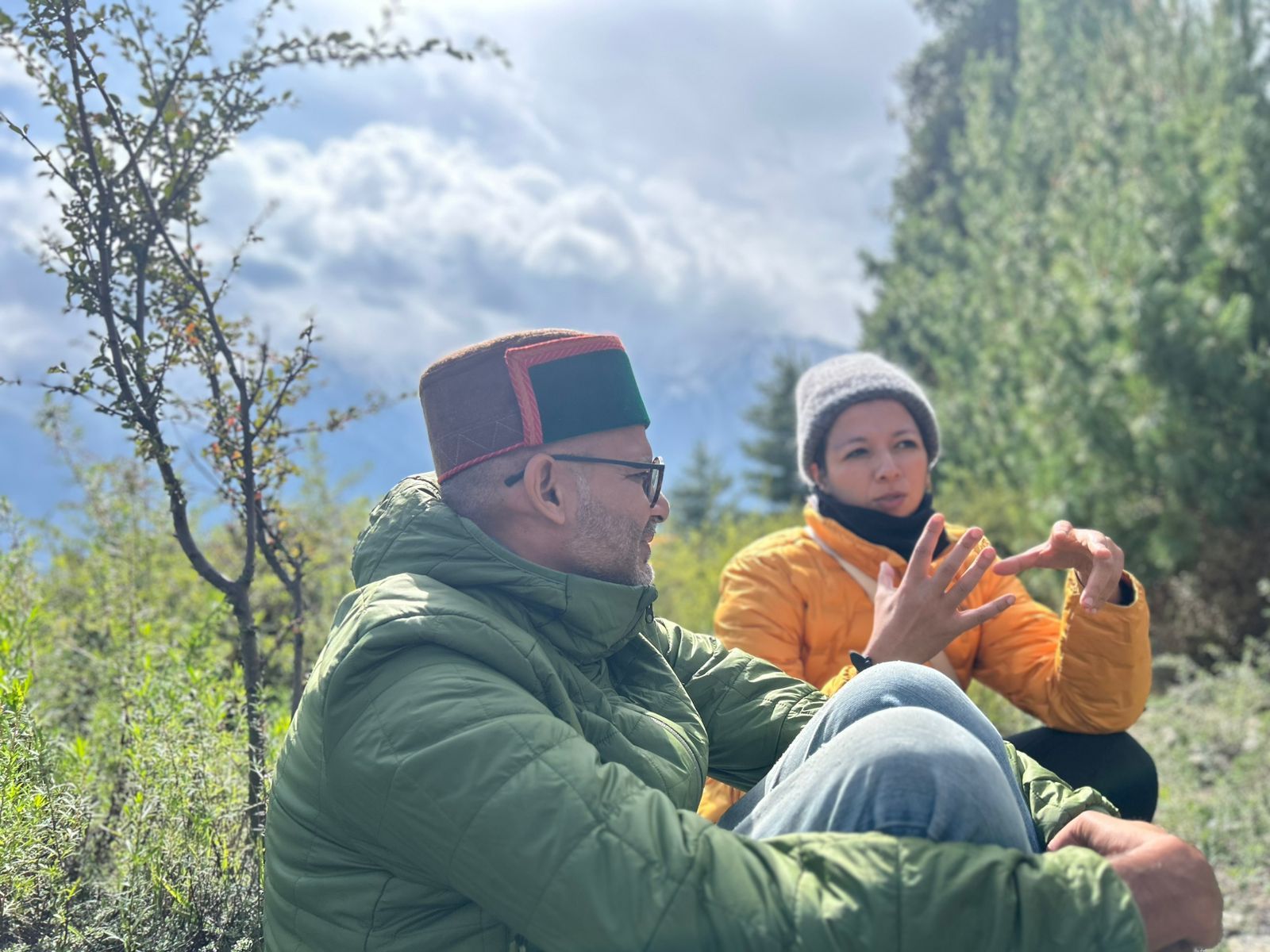
For many international audiences, the idea of a language disappearing within a generation can feel abstract. “Tenfa” foregrounds Kinnauri, spoken today by only 60,000 people around the world. What role do you see cinema playing in preserving endangered languages and knowledge systems?
Cinema has the power to immortalize us; it exists somewhere between dream and memory, as both a time capsule and a projection of the future. By representing communities that have rarely been seen on screen, it creates culture mirrors that help us understand what is at stake when something as essential as language is lost. And perhaps compel us to ask: what is at risk in our own cultures, and what needs preserving?
“Tenfa” is rooted in a very specific place, but its concerns—care, climate, and cultural loss—resonate globally. What do you hope audiences unfamiliar with the realities of life in the Himalayan region take away from the film?
I hope it encourages audiences to recognise the people in their own families or cultures who do extraordinary things every day with a laugh and a song. And perhaps to reflect on what has been lost across generations—knowledge that might hold the key to understanding who they are and where they come from.
Nihaarika Negi is a part-Indigenous, award-winning interdisciplinary artist working across film, theatre, and XR. Negi made her feature debut with “Labours Of (An)Other Solipsist” (2019). Her XR project “A City of Foxes” (2021) was supported by Venice Film Festival’s Gap-Financing Market, IFFR’s CineMart, and won the XR Financing Market Prize at NewImages XR Festival.
Negi is currently developing “Feral”, a post-colonial psychological horror feature set in 1950s India with Oscar-nominated producers Ron Yerxa and Albert Berger (“Little Miss Sunshine”, “Nebraska”) attached as executive producers. The project has found support from Sundance Institute + Women in Film, Film Independent, and NFDC Film Bazaar.
Poulomi Das is an independent film critic and programmer based in India. She was a part of Berlinale Talents Press in 2019. Her writing on independent Indian cinema has appeared in MUBI Notebook, Hyperallergic, Film Comment, Vulture, SEEN, and Mint Lounge among others. Since 2021, she has programmed South Asian cinema for MAMI Mumbai Film Festival.