Interview: Looking Beyond the Technical – Mia Cioffi Henry on Visual Storytelling
Mia Cioffi Henry approaches cinematography as an emotional craft as much as a technical one. With a background in the performing arts and production design, the Berlinale Talents 2023 alumna has developed a distinctly interdisciplinary approach to visual storytelling.
Her work has screened at some of the world's leading film festivals, including Cannes, Venice and Sundance. Most recently, she served as cinematographer on Eva Victor's acclaimed debut feature "Sorry, Baby" (2025), a film whose visual sensitivity grew out of an unusually extensive collaboration between director and cinematographer.
We got to talk to Mia about her approach to cinematography, the lasting connections she made at Berlinale Talents and why her dream-project includes "hats & horses"
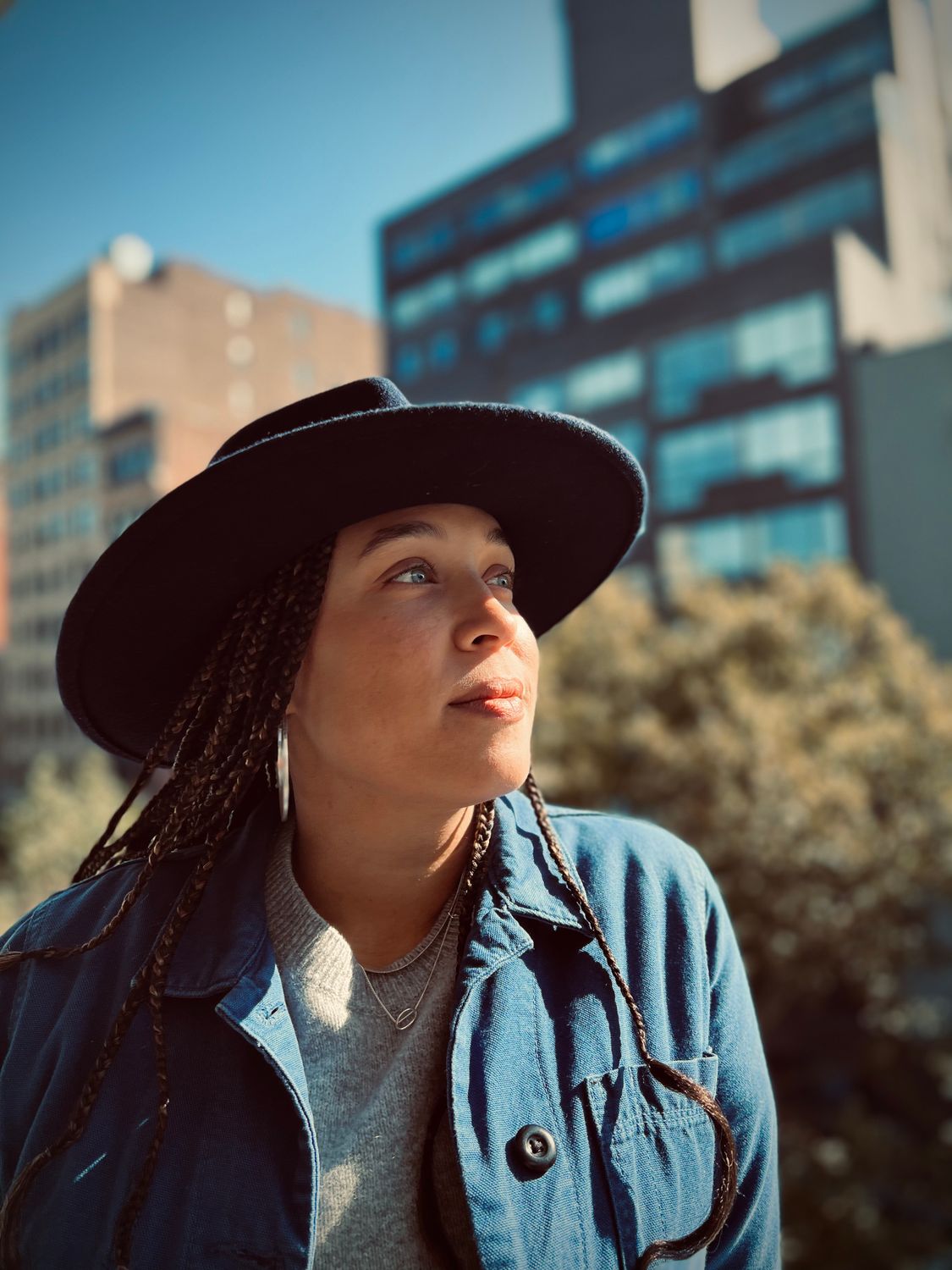
Now that “Sorry, Baby” has been out in the world for a while, what audience reactions or conversations have stuck with you the most?
In general it is really just so amazing to have an audience. So often we spend time making films in these little bubbles, hoping someone, somewhere will watch the work. To have such a global audience seeing and connecting with the film is incredible, I haven’t really had that experience before.
I love when people tell me they watched the film on a plane, such a high honor to me, because I know I have their undivided attention, however small a screen it may be!
You worked closely with Eva Victor throughout the production, helping create a process that allowed them to focus mainly on their performance as lead actor. What did that collaboration look like in practice, and how did it shape your work as a cinematographer?
We were very lucky to have been able to collaborate a year and a half before we shot the film, working on a few scenes together in kind of a workshop with a small crew. We got to practice our collaboration and communication ahead of showing up on set, so we had a really great short hand in how to communicate with one another between takes.
Eva really trusted me to find what we were looking for in the scenes because we prepped so hard leading up to the film. I think we shotlisted the entire film at least 3 times, focusing on what we needed from every single scene and moment in the film, so the process was easy by the time we showed up on set, we knew what we were looking for and we just had to execute and leave room to find the rest in the performances.
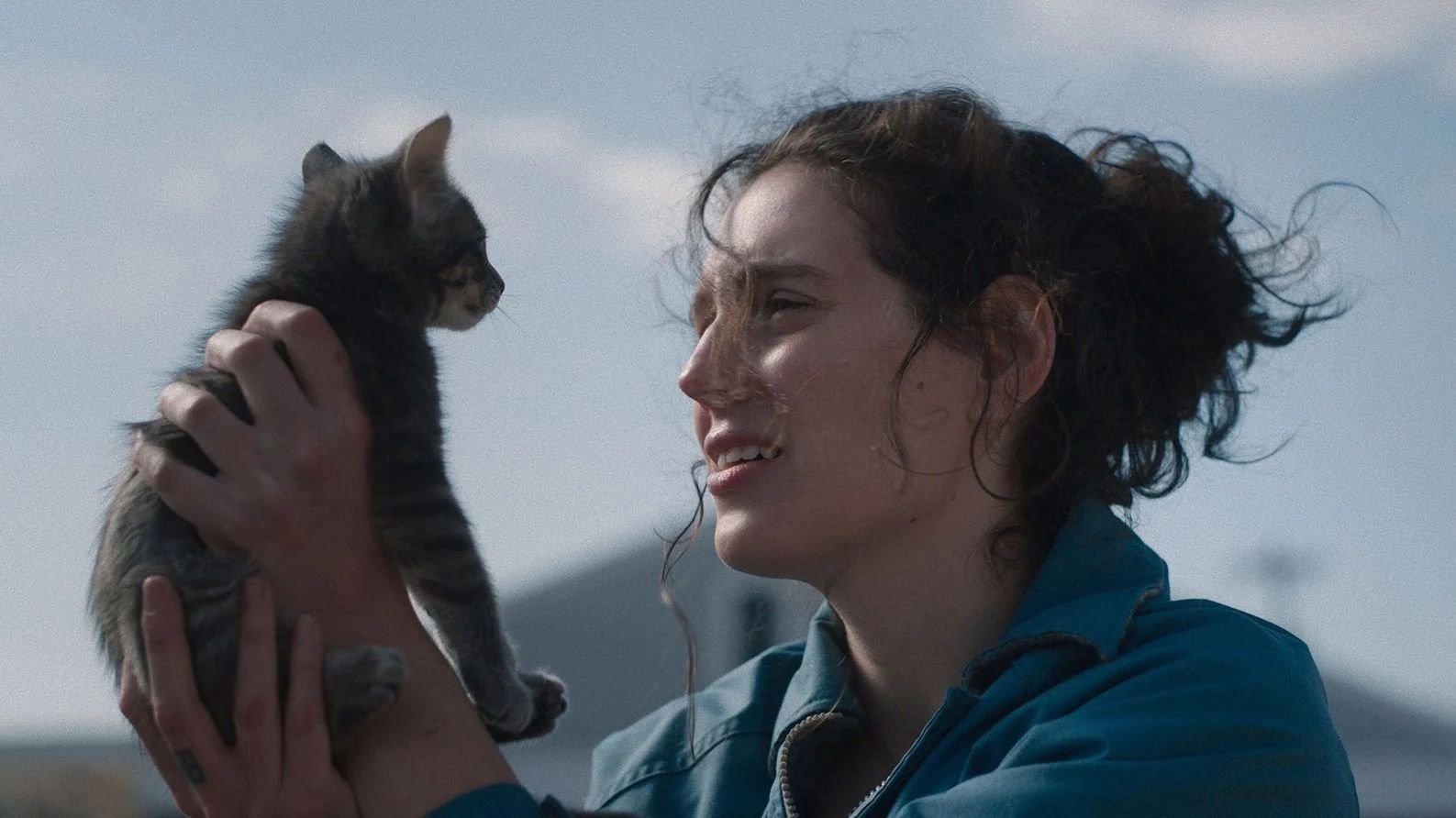
You have an extensive background in dance, production design and still photography. How do these past experiences influence the way you think about visual storytelling?
Becoming a cinematographer feels like such a summation of all the skills in different roles I have inhabited along the way. Starting out as a performer in dance and acting really helps with how I relate to the script, the characters, and the actors’ needs. My undergrad degree was in production design, so thinking of the storytelling possibilities of a space and how to create depth, color, texture and character has influenced how I think about a frame as more than just a 2 dimensional realization. All these things really affect my attention to blocking and how that relates to the camera, so that movement or stillness becomes a storytelling device as well.
There are so many different ways to approach cinematography beyond just the technical side of things and I always want to take the most emotional path I can so that the work is felt by the audience more than just seen. Visual storytelling is emotional storytelling.
You've said before that cinematography feels like the film role that's most aligned with your personality. What is it about the job that suits you so well?
I have a lot of trouble with a blank page or canvas, but to take something, a script, or a reference, a directors vision, and to riff on that and bring myself and my ideas to it, really suits me better. I don’t think I have confidence in my own voice completely, but there is something I find very satisfying about bringing myself to existing material. I also get to indulge my bossy side, as a cinematographer you get to be a leader as well as a collaborator. I feel comfortable advocating for my own ideas and bringing my crew into my vision.
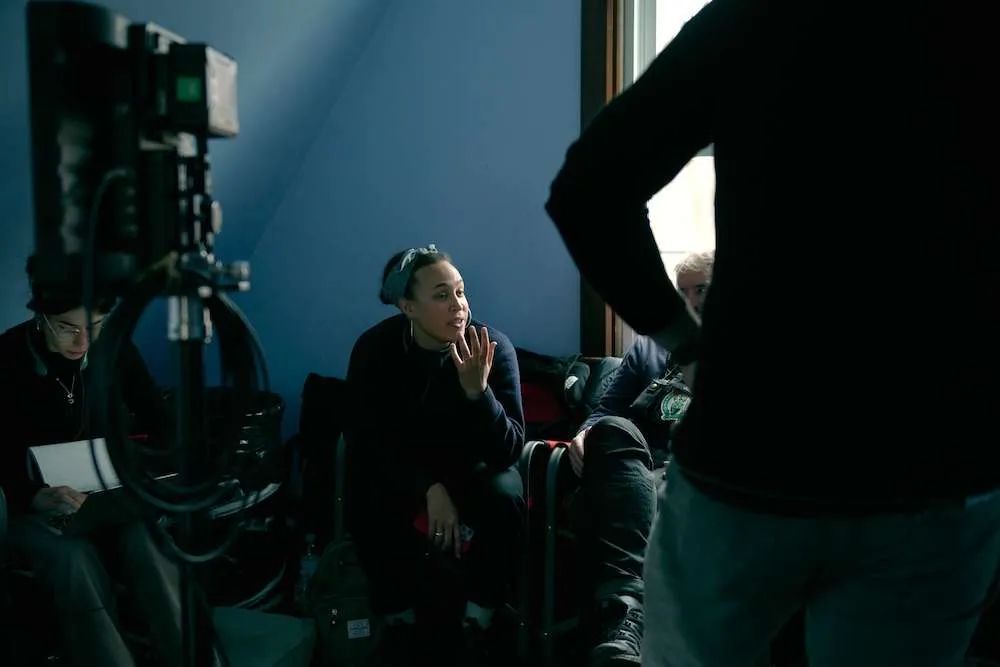
You've shot music videos as well as films. How does your approach differ between the two mediums? Are there aspects of music-video work that you've found useful to bring into your filmmaking, or vice versa?
In films, I am beholden to the text as logic, it has all the answers if you analyze it deep enough. All of my choices visually serve that story and the world we are trying to build. In music videos that logic is a lot looser, it can change from shot to shot and only has to adhere to its own rules. There is a lot of freedom in finding shots that are just interesting or dare I say, cool.
In music videos you can try a lot of things out that would not fit for an entire film, but maybe I learn or practice a technique that may eventually make its way into something more narrative some day. The emotion of a music video comes from the music itself, which I find very inspiring, but it also can do a lot of the heavy lifting, which I try to avoid letting happen in narrative films, the visuals and performance should be able to stand on its own.
You were a Berlinale Talent in 2023. Looking back, what was the most valuable experience or lesson you took away from that time?
I absolutely adored my experience as a Talent in 2023! It was the perfect time to build wider and deeper connections to the global industry that I needed to feel like I was moving in the right direction with my work. So many of the Camera Studio cohort in particular I have kept in touch with and see still, whether at other festivals, or just when we are in each others’ hometowns. It is such a special group to be a part of.
Beyond the other participants, getting to speak so intimately to the cinematographers and filmmakers who came in to talk with us was incredible. Caroline Champetier, Kirsten Johnson, Gyula Gazdag, Euzhan Palcy and more speaking about their work and asking us about ours, left such a big impression. I will also never forget the color science demo we did with ARRI Lighting which completely blew my mind and changed how I think about light to this day. So many great moments, it is impossible to choose just one!
What piece of advice would you give to emerging cinematographers who are trying to find their own voice and establish themselves in the industry?
I have built my career on deep collaborations. Finding people who would push me creatively and whose work I believed in very fully. I would try to find those whose work speaks to you and who trust you to build a vision with them. This business is way to difficult to spend a bunch of time working for people who you don’t like!
Finally, what’s next for you? Are there any stories, themes, or projects you’re particularly excited to explore in the future?
I am putting it out in the world that I would love to work on a period piece or costume drama. I want to film hats and horses! One of my favorite parts of the process is prepping a project and getting into the research. I would love to look at light and shadow from a historical point of view and get to film something from the past. I love watching and reading things set in other time periods as we have the lens of the present to see things through. Telling untold stories of the historically overlooked would be my next dream project.
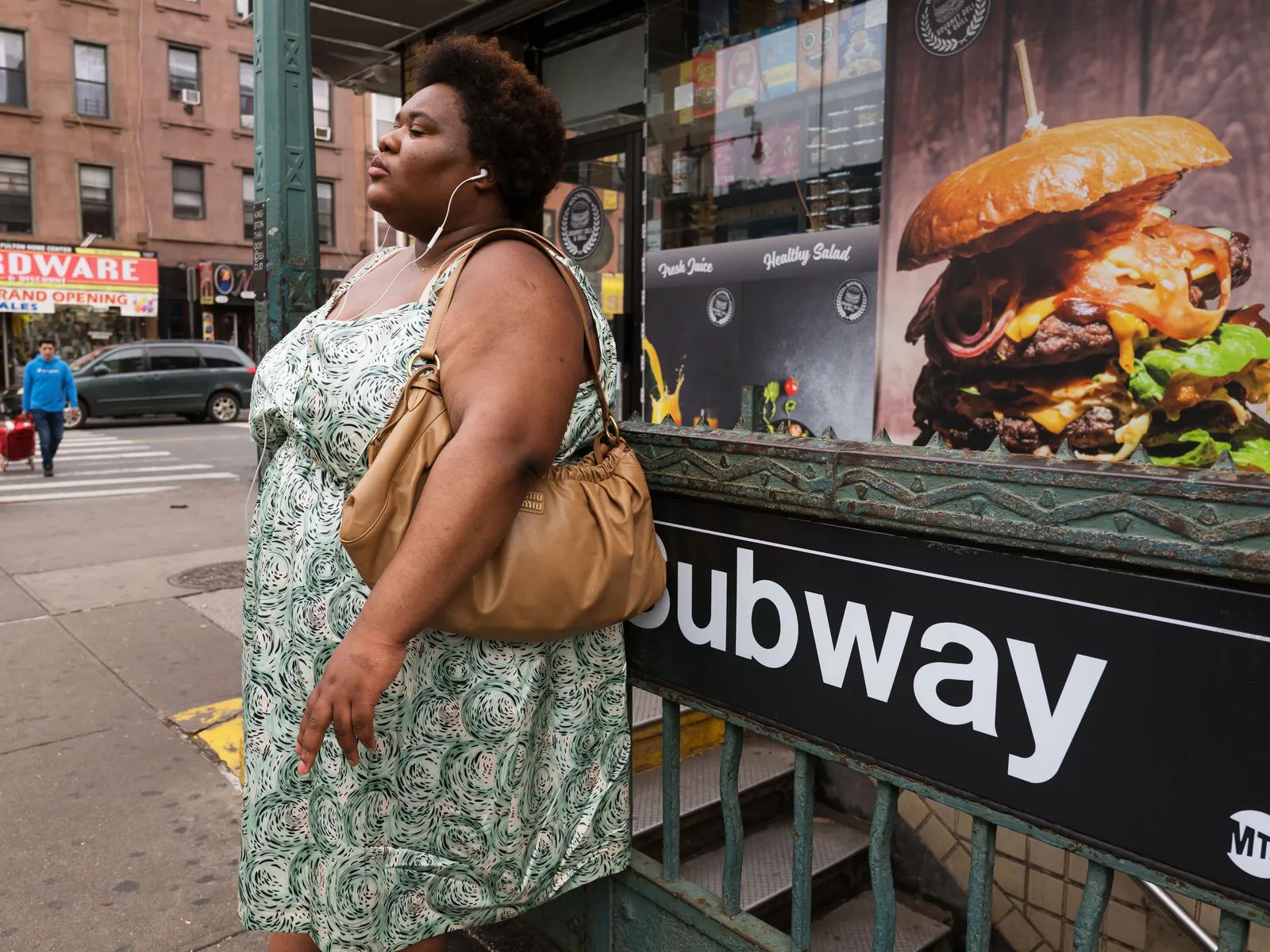
Mia Cioffi Henry is an award-winning cinematographer whose work has premiered at leading international festivals including Sundance, Cannes, Venice, Toronto, and Berlinale. Her recent credits include Eva Victor's "Sorry, Baby" (A24) and the Netflix documentary "Cover-Up". Named a BAFTA US Breakthrough and one of American Cinematographer's Rising Stars in 2025, she also leads the cinematography program at NYU Tisch Graduate Film while mentoring emerging filmmakers through 600 Black Women.