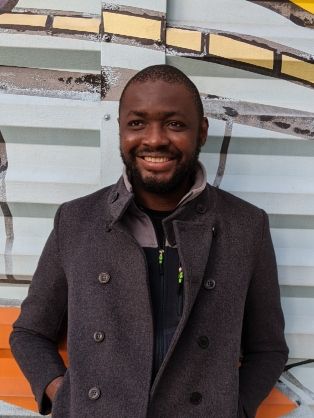
Interview: Selection Committee 2026
Each year, over 3,400 film professionals apply to join Berlinale Talents, marking the start of a journey that begins in July and culminates with the 200 selected participants joining us in Berlin in Feburary. The selection of our Talents is a long, thoughtful process, and one we’re committed to keeping transparent. Which is why we sat down with the Selection Committee to gain insight into their work at Berlinale Talents, the things they look for in applications, recurring themes they noticed in this year’s applications and the advice they have for those thinking of applying next year.
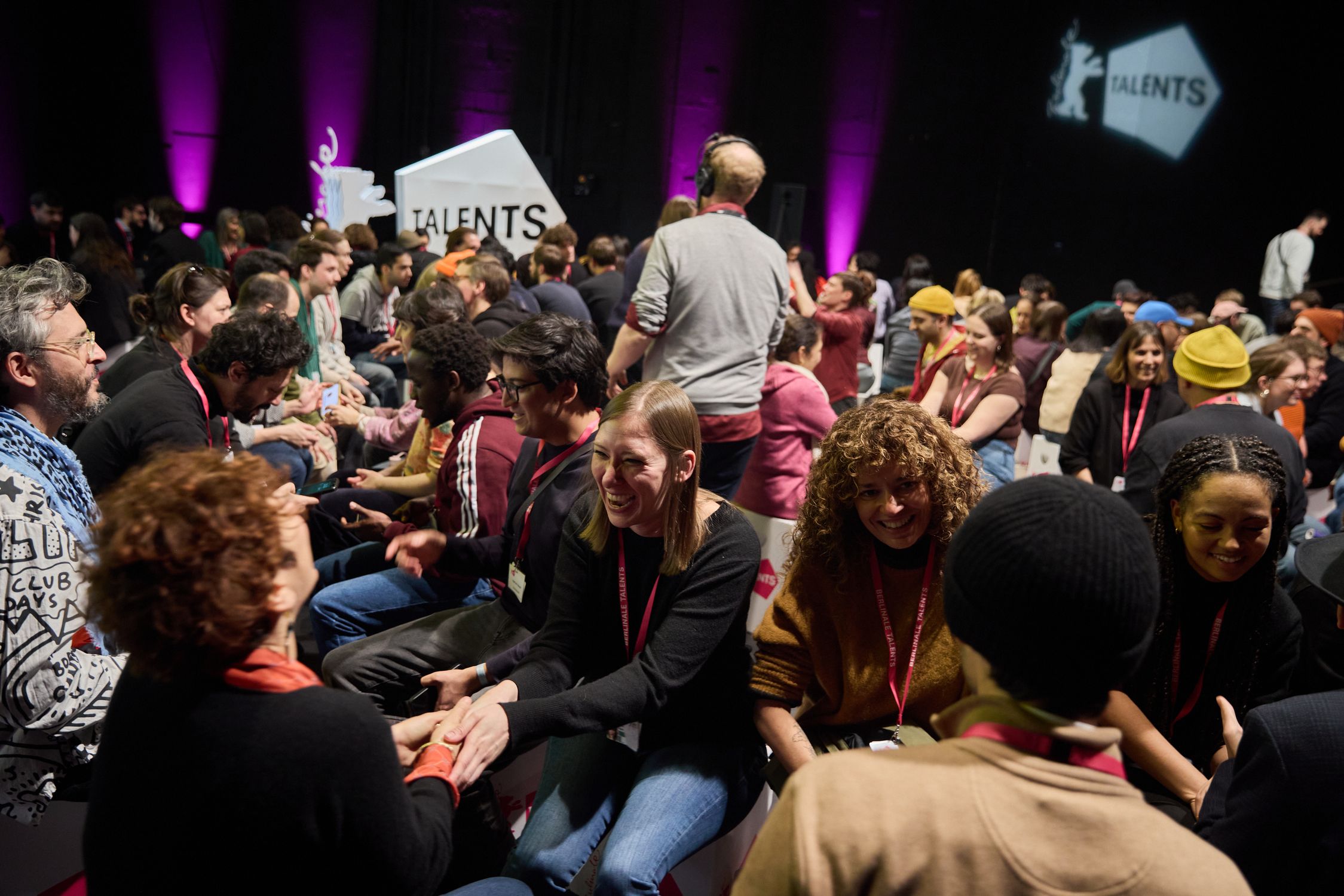
How do you see Berlinale Talents shaping the broader filmmaking ecosystem, and what kind of cultural or industry shifts do you hope to contribute to through the talent you select?
Gabor: The number of filmmakers has grown a lot worldwide over the past years and the number of films in the marketplace has become so high that anything that can help to shed light on a director or project has become even more important than ever before. Berlinale Talents shines strong and puts creatives from all over the world in the brightest limelight. In addition, a further achievement of the talent programme is to help filmmakers understand the marketplace and its current needs so that films are targeted for real and existing audiences.
Will: Berlinale Talents has always been influential in shaping the broader film ecosystem because we try to identify talents who are just at the cusp, or who show significant promise. Through the years, we have seen our Talents go on to make work that has been well received both commercially and critically. In our selection, we are looking for a broad range of Talents from different disciplines, filmmaking traditions, and geographic locations. Because filmmaking is by nature a collaborative medium, we find that bringing 200 wonderful people together who each come with their own stories and personalities, can provide a perfect spark for interesting forms of creation to emerge, whether it be aesthetic, or structural collaborations.
Agustina: I think one of the assets of Berlinale Talents is bringing people together in one of the biggest film festivals, in such a vibrant city as Berlin. I mean, making connections with colleagues worldwide, in the context of Berlinale is a remarkable milestone with innumerable benefits - having the opportunity to engage in dialogue with filmmakers from around the globe, to discuss and develop cinema and artistic language further with a focus on film culture and the profession, by participating in talks with established voices and simultaneously, being able to open new doors to develop artistic projects – the list goes on. From my perspective, I try to contribute to the emergence of new voices, not necessarily new in age, but with a particular and committed cinematic vision, developing original ways or reinterpreting classic narratives.
When assessing applications, what markers of originality and artistic voice most convincingly signal that a filmmaker has potential to contribute meaningfully to both Berlinale Talents and the future of cinema?
Will: This is tough because cinema is subjective in many ways and we all receive films differently. Having said that for every Talent that is selected - or not - at least two members of the selection committee must agree on principle. Sometimes, with the same candidate, the agreement could be immediate, or a convincing case has to be made by one or both of us even. However, we are likely to agree on candidates who appear to be thinking about their work not just as content for the machine but as a carefully thought through expression. This could show up in their visual language, images, sound work, risk taking or even personal connection to the material. We like to see voices that feel fresh enough to make you stand out from about 3000 other applicants. Why did you place that shot this way? How did you make this creative choice? Why is it that only you could have told this story in this way? Etc
Agustina: One thing I look for is how committed a person is to their environment, since it is important to have a profound and sensitive vision of the world, and at the same time a search for meaning, in which cinema becomes a field for exploration and individual yet collective expression. Are they reflecting on the profession of filmmaker and artist to enable new perspectives? Being passionate and captivated by film as an art form. Are they looking to expand horizons through cinematic lens?
Dana: Over its twenty plus years, Berlinale Talents has grown into an event for filmmakers who ideally have a bit of experience. Maybe a cinema release in their home countries, of a few shorts or a feature at an international film festival, or nowadays, a release of a film or series at a quality streaming platform. When someone is just starting, or straight out of film school, we usually advise that they take a bit more time to find their voice as an actor or storyteller or refine their signature as cinematographer or sound designer etc. This is because at so much of Berlinale Talents is not only about immersing yourself into these five days of panels and talks and networking opportunities, but also about sharing stories and experiences, giving each other professional advice, compare working conditions etc. so that at the end you contribute to strengthening global film culture as a whole.
Gabor: In practical terms, the personal video has become an important element of every application: it gives a better feeling for the applicant and their world and vision. We are also highly relying on the samples of previous work and their quality.
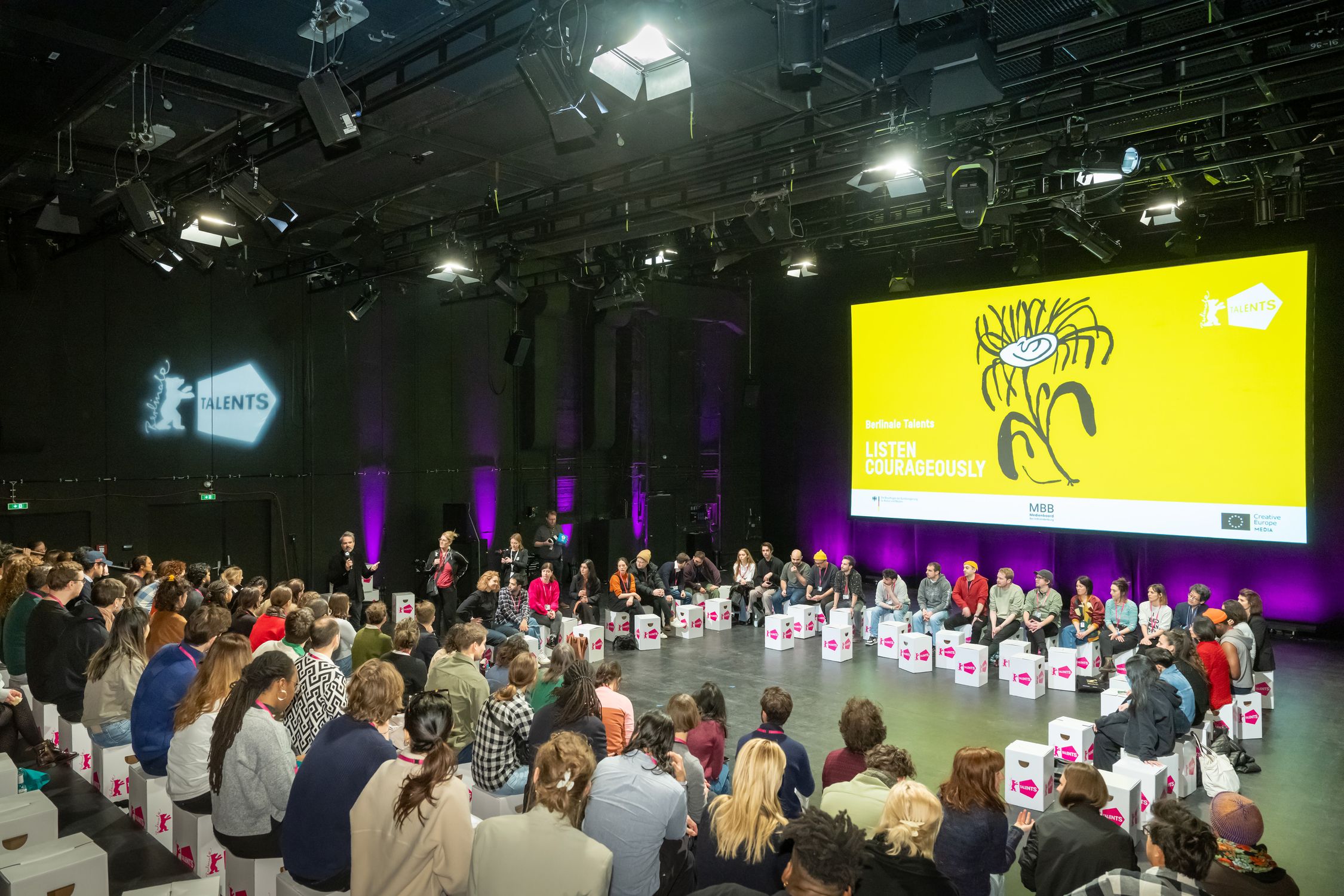
Looking across this year’s applications, what recurring themes or creative tendencies have you observed?
Dana: All the applications together are a bit like the barometer of current film culture: are there trends and tendencies, are there new voices, topics that everyone is talking about and so on. Sometimes the personal videos give an insight into what filmmakers from different countries and backgrounds consider important themes to address in their work, or which voices are underrepresented or unheard. It will come as no surprise that in the world right now, young filmmakers, like everyone, worry about the threat AI poses for our natural resources, for freedom of speech and expression and for the human stories, creativity and labour in the film industry. But people speak up as well about the genocidal wars that are happening in different parts of the world, and very often the climate crisis that affects all of us. Another topic is mental health and safety in a very stressful and competitive industry. So far, we haven't seen these topics translated into stories, but people feel a need to talk about it and hope they can speak about it with other emerging filmmakers in Berlin.
Agustina: General geopolitical concerns regarding violence arises often. On a more professional level, how to make a living out of films. What does it mean to be a filmmaker or artist in this current state of things? Many personal documentaries, telling applicants' own family history, and how to deal with industry expectations while staying true to yourself. Also interestingly this year some female concerns regarding how to make a comeback after maternity leave.
Will: I observed artists who are worried about precarious conditions and this shows up everywhere from New Zealand to Iran. One would argue that precarity is an ever-present quality of the artist’s life but in this particular time with the looming threat of generative AI it all feels so urgent as machines learn to do more and more. But we have also seen filmmakers who are adapting and playing with these tools in order to better understand them.
Gabor: Many applicants are concerned about the dark period the world is going through in all aspects of life as well as with the rise of AI and its implications for the film industry.
What is the one piece of advice you would give to future applicants seeking to stand out?
Agustina: Try to be honest and concise. Try to say something that defines you as a person and your cinematic vision. Include a sample of your work that represents the kind of films you make or aspire to make. And last but not least, don't overuse AI-generated text, as some of its vocabulary is quite generic, and we're looking for originality!
Gabor: Share fresh work samples and take the personal video seriously! Don't apply too early, during your studies or fresh out of film school, as we require some experience and previous international exposure.
Will: You can only stand out by digging within yourself to find what makes you unique. How is your practice evolving? You have to make a convincing case for yourself and the strongest way to do this is through your work. As you show up every day on projects, put in the best work possible. Then speak to us about the questions and obsessions that drive you to want to work in this crazy world of cinema.
Dana: As I said before, we are primarily looking at filmmakers with a bit of experience, and who are really devoted to the creative side of filmmaking more than to the production of content. So, my advice would be: try to find your momentum. Don't apply too early and be fair enough to realise that if you already have a lot of experience or a big network, perhaps you can find other ways to come to Berlin. And think carefully about your sample. In general, we prefer a good scene with a thoughtful motivation of what you were trying to achieve and how you made that happen. If you are reflective about your process, then you are usually ready for Talents.
The Selection Committee
Agustina Arbetman - Cinema director graduated from the University of Cinema and graduate in Creative Writing from UNTREF. Works professionally in the area of programming and curatorship since 2008, being the Program Coordinator of Talents Buenos Aires among others. Taught diverse staging courses as well as literature and curated short film programs for festivals in Africa, Asia and Europe. On the side, she develops her independent artistic practice and her latest pieces participated in the National Prize 8M 2021 and 2022 respectively and both works were exhibited at the Kirchner Cultural Center. She received a grant from the National Fund for the Arts to develop her upcoming theatre play. In the past years she was a jury member of FIDOCS (Chile) and tutor of DOCSMx (Mexico), in both cases in the emerging artists section. Her first published book was presented in May 2023 at the International Book Fair Buenos Aires.

Dana Linssen is a Dutch film critic, philosopher and writer. She is the former editor-in-chief of de Filmkrant magazine, a long-standing film critic for NRC Handelsblad, the founder of the Slow Criticism Project and a curator of the Critics’ Choice at the International Film Festival Rotterdam. She has received several awards for her work as a film critic and has served as a Talent Press mentor for many years.
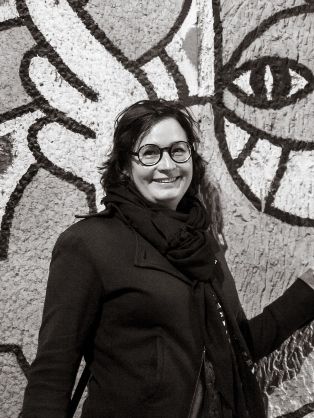
After his studies of Cultural Management in Vienna, Birmingham and Chicago, Gabor Greiner worked as a journalist and film critic. In 2003, he moved to Brussels to take charge of the distribution support department of the MEDIA Program at the European Commission’s Film Fund. In 2009, Gabor became acquisitions executive at the international sales agent, The Match Factory. In August 2010, Gabor moved to Berlin to take over acquisitions of the French-German sales company, Films Boutique, winner of the Golden Bear in 2017 and 2020 and the Golden Lion in 2011 and 2016. Gabor is a member of the European Film Academy.
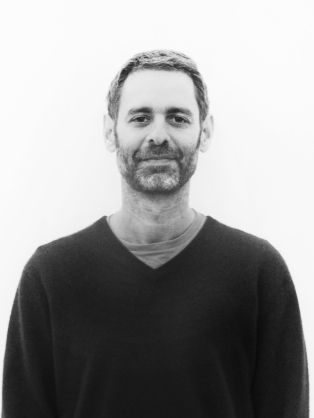
Wilfred Okiche is a film and culture critic with considerable experience in African and international cinemas. He has attended critic programs and reported from film and theater festivals in Locarno, Rotterdam, Stockholm and Sundance. Wilfred has worked in programming teams for Film Africa in London and the Encounters International Documentary Festival in South Africa. Wilfred has mentored fast rising film critics at Talents Durban. This is his third year on the selection committee of Berlinale Talents. His writing has appeared in Variety, IndieWire, The Continent and Senses of Cinema among other publications. He is a member of FIPRESCI and has participated in juries at the Berlinale and the Carthage film festival. He is in first year of grad school studying film and media studies at the University of Southern California.