Interview: What Makes a Story Worth Telling? Berlinale Talents alumnus Daniel Bekerman on Producing Independent Film
"Don't follow trends — strive to find something new."
It’s a philosophy that has guided Daniel Bekerman from founding one of Canada's leading independent production companies to producing acclaimed films such as “The Witch” (dir. Robert Eggers, 2015) or "The Apprentice" (dir. Ali Abbasi, 2024). We sat down with the Berlinale Talents alumnus to discuss the evolving role of filmmakers in the age of AI and the importance of forging your own path.
Over the years, your production company Scythia Films has produced acclaimed films such as "The Witch" and "The Apprentice." When considering a new project, what qualities in a story or filmmaker catch your attention?
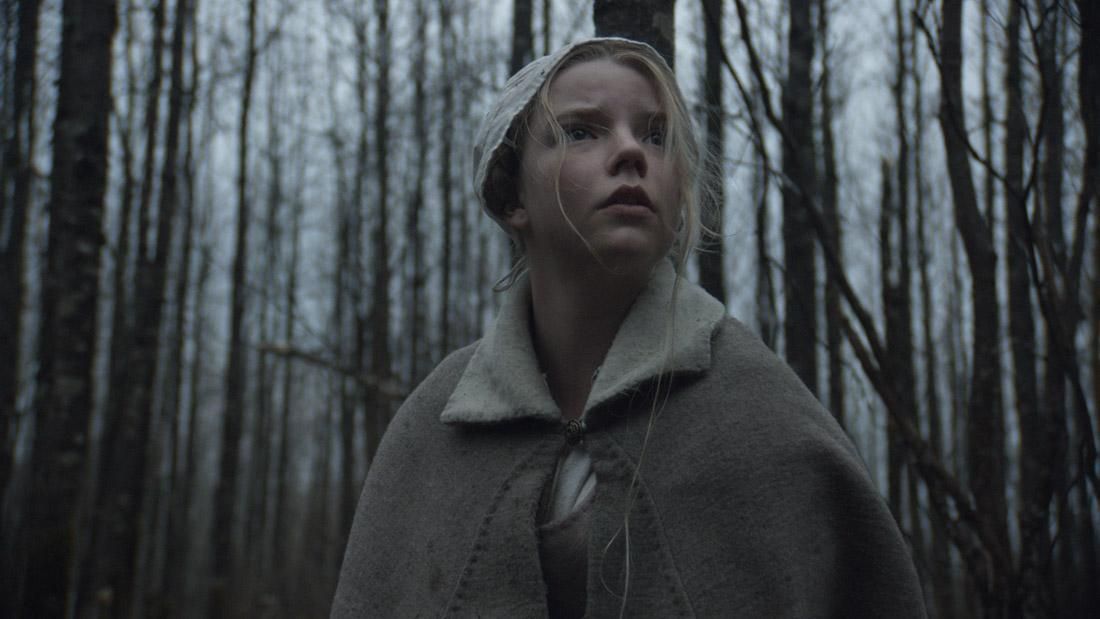
Early in my career, I heard a little voice in my head whispering, "Don't follow trends — strive to find something new." That voice got louder when *The Witch* succeeded, because I felt the film was genuine and singular in its vision, and it clearly resonated with audiences. Over the years I've grown increasingly confident in that ethic. I'm not especially interested in what was successful last year, or last week.
For one thing, there's a math problem with chasing those successes: it takes years to properly develop, finance, shoot, complete, and distribute a movie. By the time you're done, the shiny object you were chasing is five years old and has likely left the zeitgeist. What excites me is when an artist finds a way to say something about the human experience that hasn't quite been said before, at least not in that particular way. I'm looking for that kind of ambition.
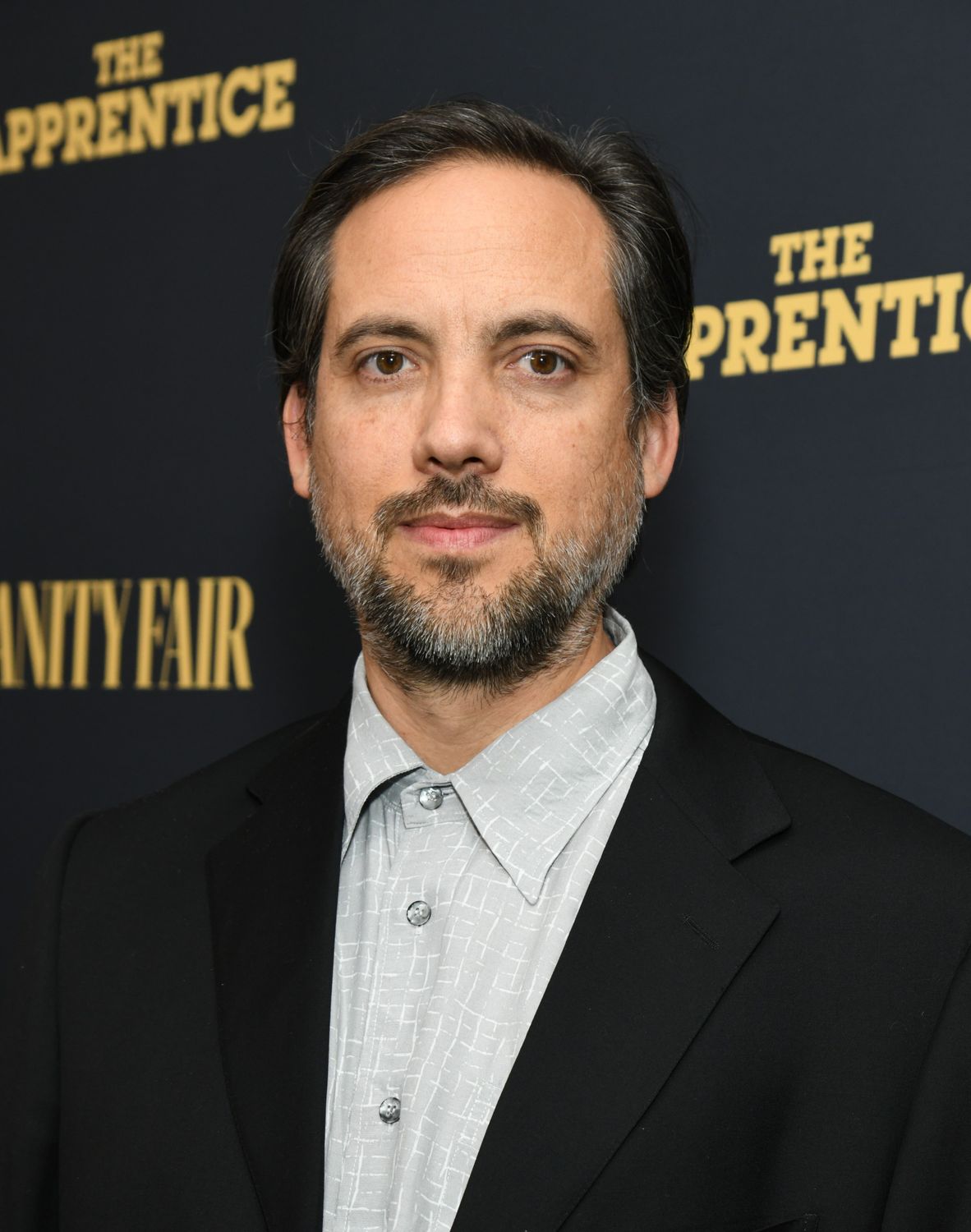
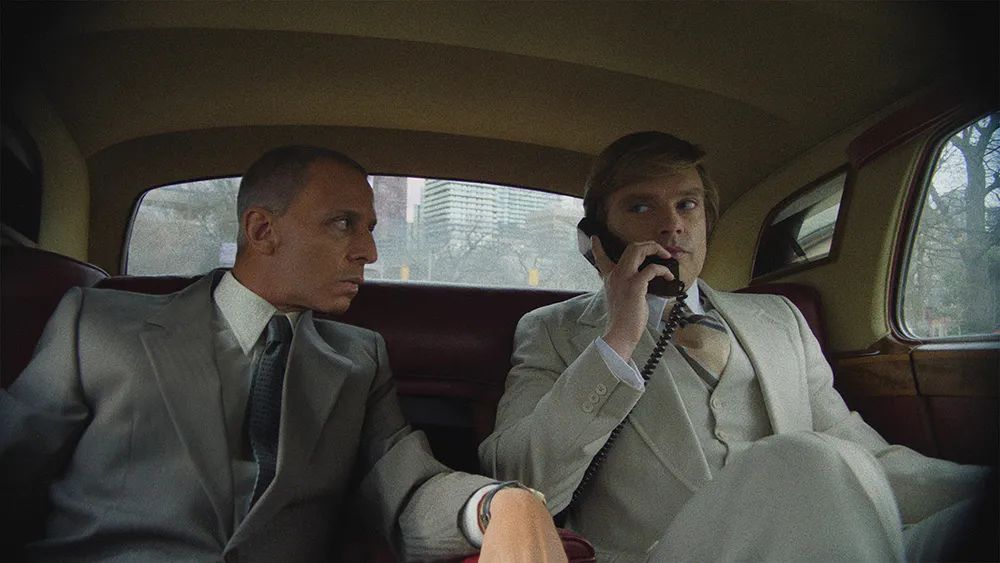
There are so many strange, beautiful, and sometimes frightening creatures living in the collective unconscious. We go spelunking into some deep, dark cave, and suddenly there's a pair of eyes looking back at us. In the case of "The Apprentice", those were the eyes of a truer version of Donald Trump than the man usually allows the world to see. Coaxing that creature into the light through celluloid was a worthwhile — and honestly thrilling — endeavor. Indeed those are the kinds of thrills that keep me going.
Are there stories or perspectives that you feel are still underrepresented in cinema today, and that you'd like to see more of?
As we watch the flow of empathy in society ebb into xenophobia, many voices are left high and dry. When public sentiment roots itself in fear, it becomes crucial to find and amplify voices that punch holes in that kind of small-mindedness. To paraphrase Leonard Cohen: That's how the light gets in.
That voice can belong to someone from a historically marginalized group. It can also be a voice willing to speak against the grain of moral acceptability. There's also an arc I can track in the story of storytelling itself. It moves from an era in which stories and storytellers were zealously managed by gatekeepers — power structures that understood their authority was predicated on their ability to shape and mold collective narrative — toward something else entirely. The last few decades have seen that control diffused. Perhaps it began with rock 'n' roll. It certainly accelerated with the proliferation of the internet. In the age of social media, and now AI, questions of narrative control have become the central topic of public discourse.
Even as power imbalances have grown more extreme, no single group seems particularly good at controlling societal narratives for any sustained period of time. This has unleashed a much-discussed era of chaotic division, in which consensus reality itself has broken into fragments. That does appear to be a problem — but it also represents a profound, and potentially democratic, reorganization of our systems of storytelling. The challenge for filmmakers is clear and daunting: how do you speak with authority and gravity in a populist medium, when everyone has become a storyteller? That's a heavy question, hard to keep on the tongue. It's also our new job description.
You executive produced "Teenage Sex and Death at Camp Miasma," which recently premiered at Cannes to rave reviews. What convinced you to get involved with the project, and what did you see in it at an early stage?
When I saw "I Saw the TV Glow", I could tell Jane was hip to magic and revolution. That was enough for me.
You founded Scythia Films over fifteen years ago. What do you see as the biggest challenges facing independent production companies today, and how have those challenges changed over the course of your career?
When I was starting out, there was already a sense that the salad days had ended. In retrospect, I think I was witnessing the slow death independent film suffered as a result of the DVD era ending. Then the streamers spewed themselves onto the scene. That brought some good paydays for a small number of filmmakers, but overall, the vitality kept draining from the independent film world, and most of what got produced grew increasingly derivative and unambitious.
That brings us to today, where we find ourselves at a crossroads. To the right is capitulation: join the streamers and the remaining studios in their pursuit of common-denominator mediocrity. To the left is sycophancy — we walk backwards down that road, facing and aping the streamers and the studios as we go. Of course, the left is the same road as the right; it just depends on which way you're facing.
The road straight ahead — the one I choose — is barely a road. It's a hot, dusty trail we navigate at our own peril. My confidence is this: I know that my fellow travelers on this road and I carry something valuable, something that can sustain us on our journey. It's the sanctity of our intention.
What does that mean, you may reasonably ask? I mean that the intentions of the storyteller become the visible fabric with which the story is woven. When our intention is to chase the mirage of profit and prestige, those intentions dilute the value of the story. When our intention is to find insights into the human psyche that deepen our collective understanding and our shared humanity, the fabric is rich with the reflection of those intentions.
You were a Berlinale Talent in 2013. Looking back, what was the most valuable experience or lesson you took away from that time?
I was attending many labs during that period, including Berlinale, and it was tremendously impactful for my career. I still jump at opportunities to attend labs, whether as a student or a presenter. Over time, I learned that the value of these events — Berlinale especially — is that they don't just offer the chance to learn from titans of the industry (in my case, Wong Kar-wai and Walter Murch). They also create environments where we can experiment with our professional identities. We watch the light in our labmates' eyes spark or fade as we blabber about this or that, those moments provide incredible opportunities to learn what works for us and what doesn't.
Finally, what piece of advice would you give to emerging producers who are trying to establish themselves in the industry?
Stay connected to your humanity. Maybe you're Orpheus, and you leave the world of the living in pursuit of your passion — but your job is to come back, preferably with Eurydice, and all that you both have learned. Do that, and audiences will recognize and appreciate it.
Also, adopt the mentality of a samurai. Picture your story torn apart by wild dogs, or thrown off a cliff into a valley of spikes. Why? Because you shouldn't assume the world needs your story just because you want the world to need it. If the light of the idea gets extinguished by a breeze or a gust of wind, don't drag the useless lantern up the mountain. It's not worth it, and nobody wants it. Also, have fun!
Daniel Bekerman is the founder of Scythia Films, one of Canada’s leading independent production companies, with offices in Toronto, Vancouver, Winnipeg, and Los Angeles. His recent productions include "The Apprentice", directed by Ali Abbasi and starring Sebastian Stan and Jeremy Strong, which earned two Academy Award nominations, as well as "Close to You" starring Elliot Page, "Endless Cookie", winner of the 2025 Hot Docs Rogers Audience Award, and "I Object", directed by Andrew Niccol.
Bekerman’s producing credits also include Robert Eggers’ Sundance-winning "The Witch", Viggo Mortensen’s "Falling", and "Cold Copy" starring Tracee Ellis-Ross and Bel Powley. As an executive producer, his recent work includes "The Wedding Banquet", "Love Me", "My Old Ass", and the hit thriller "Ready or Not".