Interview: Berlinale Talents Mastercard Enablement Programme Jury 2026
The one-of-a-kind Berlinale Talents Mastercard Enablement Programme returns for its sixth edition, with Berlinale Talents and co‑partner Mastercard once again supporting two new cinema-centred projects championing gender equality, ecological sustainability, and long-term inclusion in the industry.
This year’s jury brings together a broad range of creative and industry perspectives, including actor, writer, director, and producer Lamin Leroy Gibba (Dogfriend, Black Fruit), director and Berlinale Talents alumna Mala Reinhardt (The Second Attack, Familiar Places), and Maximilian Floegel, Vice President of Marketing Communications at Mastercard for DACH . With the festival and the announcement of this year's fellows and alumni fellows approaching, we sat down with them to gain insight into their work with the programme.
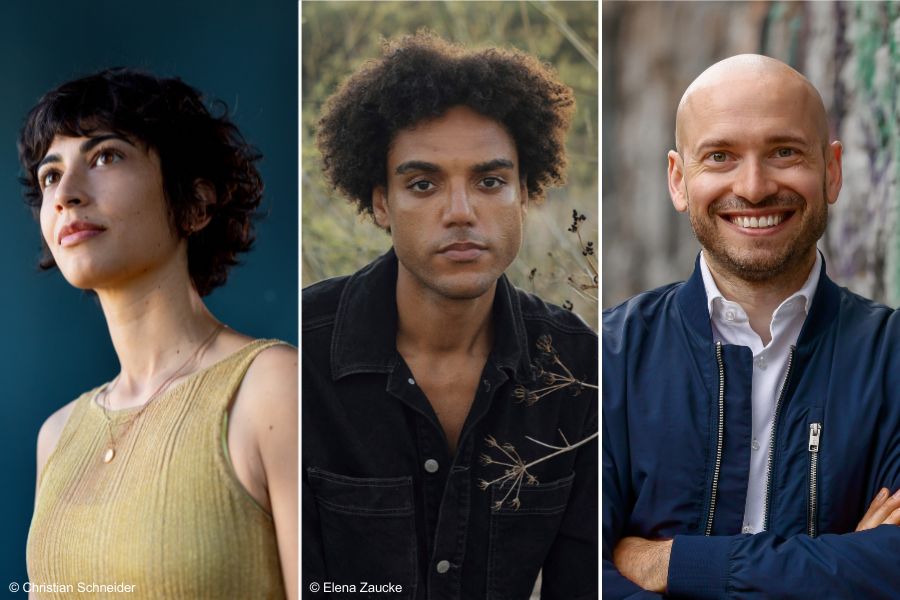
What drew you to the Berlinale Talents Mastercard Enablement Programme and made you want to be part of the jury?
Mala Reinhardt: In 2025, I attended the award ceremony for that year’s projects and was deeply impressed by the dedication and commitment shown by my fellow Berlinale Talents participants. Beyond working on their own films, they were actively engaged in giving back to their communities and creating access and opportunities for others. Anyone familiar with the precarious nature and demands of working in the film industry understands how significant this level of engagement truly is. When I was invited to join the jury for this year’s edition, I did not hesitate for a moment.
Maximilian Floegel: What particularly impressed me about the Berlinale Talents Mastercard Enablement Programme is the passion with which participants pursue their creative ideas. Passion is a central value of our brand and also a personal driver for me to continually look beyond the mainstream for new creative ideas. The programme does not simply make unconventional ideas visible; it actively supports them through access, enablement and sustainable perspectives. Being part of the jury is therefore a natural extension of our commitment to empowering people and supporting dedicated creatives at the next stage of their journey.
Lamin Leroy Gibba: I was excited about how uniquely the programme supports filmmakers from around the globe in building sustainable and community-rooted initiatives.
You reviewed a lot of applications. What impressed you most about the projects that were submitted?
Lamin Leroy Gibba: I was so impressed by the variety and urgency of the submissions. Beyond their demanding artistic work, all of these filmmakers are actively building networks and opportunities around their communities – often in the context of very limited resources.
Mala Reinhardt: I was incredibly impressed not only by the diversity of the projects, but the uniqueness of each voice and the sincerity of their intentions. Reading through the applications, I felt how deeply rooted many of these initiatives are in lived experience and genuine care for their communities. Across different regions and realities, Berlinale Talents alumni are creating spaces for gender equality and diversity, rethinking education and fair working conditions, fostering peace and understanding, and engaging with environmental responsibility and climate action. The projects stood out for their commitment to inclusive, innovative and impactful responses to the urgent challenges of our time.
Maximilian Floegel: What impressed me most was the extraordinary imagination and sense of possibility reflected in many of the projects. A number of applicants, particularly from the Global South, demonstrated a powerful, positive vision that drives them to pursue bold and unconventional ideas – with the confidence to take their stories far beyond local contexts and onto an international stage such as the Berlinale. This courage to imagine a different future and to believe in the relevance of one’s own voice is truly remarkable. It is a form of creative imagination that can challenge and enrich perspectives globally, and one that perhaps we in the Global North can continue to learn from.
What criteria did you find most important when assessing the filmmakers who balance artistic work with social impact?
Lamin Leroy Gibba: There were many very compelling applications, which made the decision really difficult. We looked closely at the specificity of each initiative: the context it serves, its long-term vision, and the concrete impact on local communities.
What did you learn from the applications about the evolving role of filmmakers in society today?
Mala Reinhardt: I believe that, especially in a world that feels increasingly divided, films have the power to bring people together, if only for a moment. They are accessible, far-reaching, and able to touch audiences on an emotional level in ways that facts or arguments often cannot. The filmmakers behind these projects understand their role as far more than just technical practitioners. They are community-builders and changemakers, using film as a creative tool to reach others.
Lamin Leroy Gibba: Again, the depth of imagination and purpose of the submitted projects were really powerful. It was inspiring to see the applicants using the tools of cinema to create pathways for social change. It showed how storytelling, organising and community building can be very much naturally connected.
What do you think this programme contributes to the global film community?
Lamin Leroy Gibba: I think this programme strengthens the idea of a genuinely global film community by connecting and supporting talent across regions with varying degrees of access to film infrastructure and resources. The financial support and mentorship offered feel like steps toward the kind of access and inclusion we need much more of.
Maximilian Floegel: The programme makes a meaningful contribution to the global film community by opening doors that would otherwise remain closed. It creates a space where emerging voices from different regions, backgrounds and realities can connect, learn from one another and be taken seriously on an international level. By combining artistic exchange with concrete enablement, Berlinale Talents helps diversify the stories that reach global audiences and strengthens a film culture that is more inclusive, more representative and ultimately more resilient.
Mala Reinhardt: Programmes like the Berlinale Talents Mastercard Enablement Programme are vital for grassroots initiatives. They demonstrate that large companies can truly care about social issues, and seeing that kind of support is incredibly uplifting. After founding a project, the initial excitement can fade, and it becomes challenging to maintain the energy and motivation to work for free and make these initiatives sustainable. This is where Mastercard’s support makes all the difference: not only through funding, but also through mentorship and hands-on guidance in developing the projects. It is an invaluable initiative, and I hope we continue to see this kind of encouragement for dedicated filmmakers and community-builders in the years to come.