Interview: César Caro Cruz, Berlinale Talents Alumni 2010 and Nipkow Fellow
Fifteen years after being selected for Berlinale Talents, director and writer César Caro Cruz returned to Berlin this year, selected as a fellow of the Nipkow Programm.
The Nipkow Programm is one of the Berlin Film Residencies, supported by Medienboard and Berlinale Talents, and offers a variety of tailor-made workshops and mentoring sessions to a selection of international filmmakers every year. Applications for the Nipkow Programm are currently open to filmmakers from around the world until January 5. Berlinale Talents Alumni can apply directly through their online profile.
We caught up with César to hear all about his time at Nipkow and the project he’s been developing there.
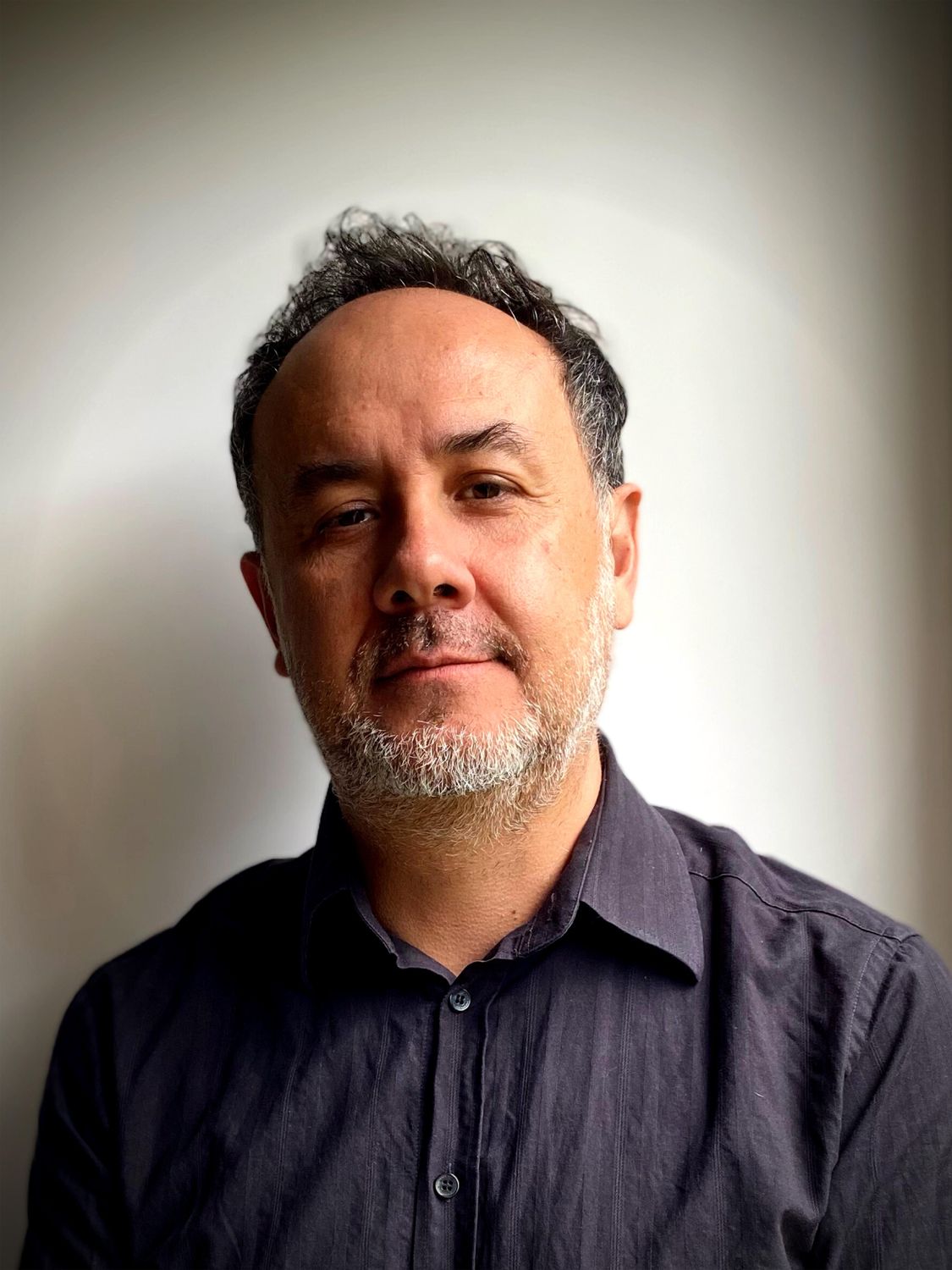
It’s been almost sixteen years since you were with us at Berlinale Talents in 2010. Was there a particular moment or insight from your time in Berlin that stayed with you?
On that occasion I arrived in Berlin very happy, carrying a DVD under my arm with a rough cut of my first film, hoping someone could help me with post-production. I remember how exciting it was to see so many young filmmakers gathered in an amphitheatre to attend a master class; that feeling of collective euphoria is something I clearly remember from my first day at Berlinale Talents. I remember Stephen Frears’ talk, it was very inspiring. He is a filmmaker I admired, and listening to him talk about cinema was truly revealing. That year, the discussions also focused a lot on digital cinema and digital storytelling, much like today the conversations are surely centred around AI.
In 2025 you were selected for the Nipkow Programm with your project “Rojo en la Niebla” (Red In The Fog). What did the fellowship give you and your project that you might not have found elsewhere?
What makes Nipkow particularly unique and very interesting is that it offers a period of work dedicated exclusively to the project, and in a city as stimulating as Berlin. Living in Berlin, and being nourished by all the cultural activities that take place here, such as cinema, music, painting, and history, makes it an ideal place to retreat and write and develop a project.
In addition, Nipkow gives you the opportunity to work with tutors who follow your project closely and encourage you to set deadlines, which is very important in screenwriting, because it makes you feel that you are working toward a clear objective, that you are moving toward a goal, and the feedback you receive guides you to your next step.
The same applies to the workshops: each workshop with people from the industry is also useful, because what you learn you can apply in a practical way to the project you are working on. In the end, it all becomes a synergy that makes you feel like you are living three months fully focused on your project, while at the same time being inspired by a multicultural city like Berlin.
If you were describing the Nipkow Programm to a fellow filmmaker who’s never heard of it, how would you sum up the experience?
It’s three months in which you immerse yourself in your project, in your story and in your characters. It is also a time to immerse yourself in your own life as a filmmaker, because you have the time to think about yourself and your artistic goals. With Berlin around you as a place that welcomes you, where you can find spaces and moments of great inspiration for your project and for your own life as a filmmaker.
Could you tell us a bit about “Rojo en la Niebla”, the project that you worked on at Nipkow?
Red in the Fog is a fiction feature film project that is currently in the development stage. It is a thriller-drama that takes place in Chile in 1971 and tells the story of Luchito, a young man who trains horses for fox hunting. One day, two local cowboys force Luchito to take part in the robbery of some jewels belonging to the American mining community. The heist goes wrong, and an American citizen is shot. Luchito must find a way to clear his name and protect his family from the threats of these two robbers who have brought violence and death to Luchito’s town.
How does teaching at a film school change the way you direct or write, and how does your creative work influence how you teach?
I believe that making films and teaching how films are made nourish each other. When I teach, I have to study, prepare myself, and stay up to date with new technologies and with new generations, how they understand cinema, stories, and how they consume them through the platforms where they have learned to watch films. I learn a lot from my students: from their interests and from what attracts them about new technologies, and this feeds my creative work at every stage of a film, from writing the script to being on set shooting or editing. Making cinema also means staying current and being nourished by the reality that surrounds you.
You tend to work primarily on fiction films. What is it about the genre that attracts you?
I work in fiction because it gives me greater creative freedom. In fiction, I can enter spaces that operate under different rules than reality, which can sometimes be limiting due to its own logic and the way we understand the world. In fiction, one can step into a parallel reality that always serves as a mirror of one’s own reality, that is fascinating. On the other hand, I think reality is already harsh enough to want to replicate it exactly in a film. I’d rather fictionalize it and play with it, to tear it apart and reflect from there. It’s healthy to enter a world that behaves like reality, but ultimately is not.
What advice would you give to filmmakers considering applying to the Nipkow Programm?
Simply apply, it is absolutely worth it, and let yourselves be carried by the experience. But it is important to set goals and challenges, because in the end you are responsible for the progress and for what you are telling. You have to give yourself the time to write and rewrite, without excuses, without distractions, to dive into the material and get the best out of it.
Looking ahead, what changes would you most like to see in the global film industry in the near future?
I would like to see new technologies help us make better films and tell stories that are truly challenging. Precisely because of being in Berlin, for different reasons, I have become more closely involved with AI, and I see that it is here to stay. I believe we need to be creative enough to use it responsibly and to our advantage, without losing our humanity. That is possible by opening ourselves to it, understanding it, and studying it. In Berlin I have been working with a German-Chilean friend who is an expert in these fields, and he has opened my mind to seeing creative possibilities for cinema through the use of AI. I already have in mind a feature film project to develop in Berlin, with some touches of AI that could contribute to the storytelling. You have to be there and try it. The future is, and has to be, exciting.
César Caro Cruz (Chile). He is a director, writer and producer. He has written and directed the feature films: "Third World" (2010), "The Butler" (2017), and "The Bird of Fire" (2021), a film selected to represent Costa Rica at the 2022 Goya Awards. He has worked as a screenwriter for Chilean TV series. Currently, he is in post-production of his next feature film, The Night of the Comet, and in the development stage with the project Red in the Fog, recently worked on during the Nipkow Programm in Berlin 2025.