Epistolary Family Saga in Which the Protagonists Opt to Forget Rather than Remember
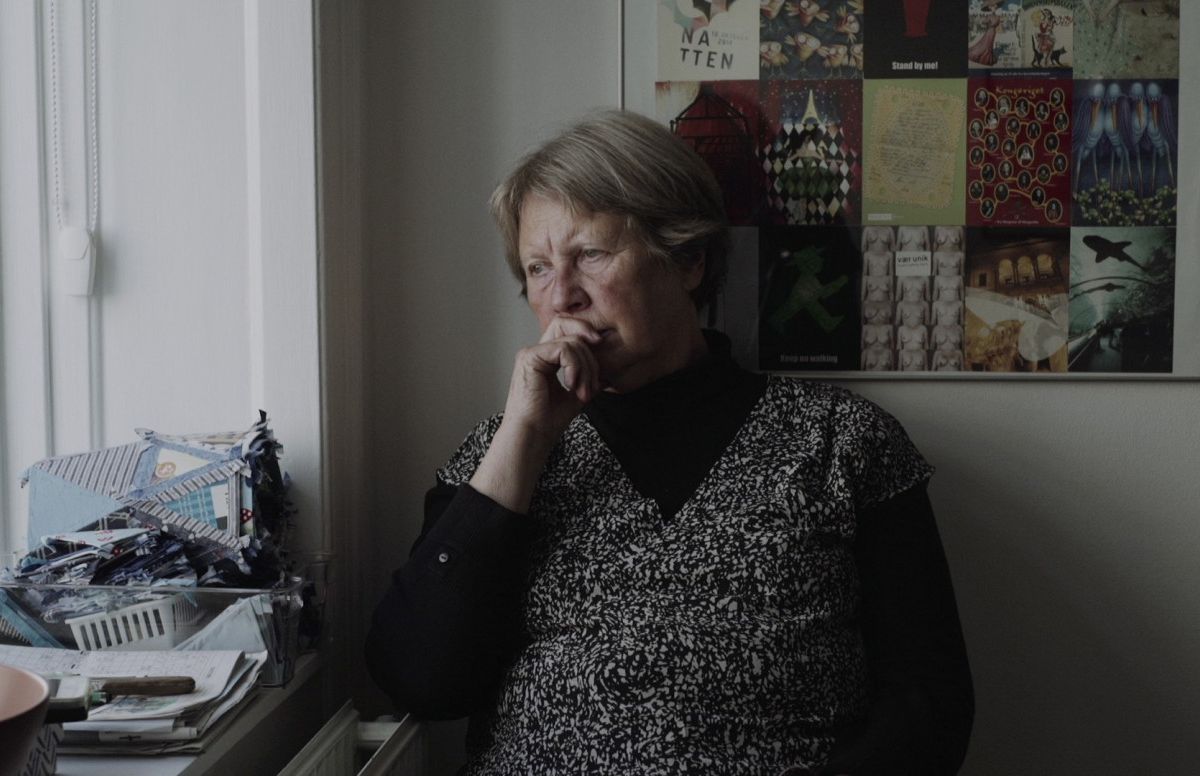
Out of sight, out of mind – filmmaker Jide's Danish mother and Nigerian father fell in love 45 years ago but living between two continents finally took its toll on their long-distance marriage. Or so it would seem. When a Farm Goes Aflame is a film about a family and the secrets and lies that accumulate over the years. It is a film that attempts to explore the way in which one’s identity shapes one’s conception of romantic love. It is also a film about finding one’s roots and at the same time leaving the past behind in order to transform and start anew.
Akinleminu’s second feature sees him embarking on a quest to find out why his father couldn’t tell his mother the truth and why she wasn’t able to ask him. In his debut documentary Portrait of a Lone Farmer (2013) Jide attempts to get closer to his estranged father but there is something elusive he cannot capture. His family lived in Nigeria happily for 16 years but then they moved back to Denmark escaping political turmoil, inflation and ethnical tensions. Not being able to find work in Europe, his father decided to stay behind. While exploring the consequences of his family’s painful separation he discovers his father’s secret: a second family he’s kept hidden for 30 years. Polygamy is common in Nigeria, especially in the Muslim north and rural areas. It has declined in the last decade but it remains encouraged under customary law and religious practices. In a survey conducted in 2013, 33% of Nigerian women reported that their husbands have more than one wife.
The first film sets in motion the second one and triggers a painstaking re-evaluation of the filmmaker’s personal and family/families’ history/histories in which his mother and new found siblings come to the fore. While he traverses half the globe - Denmark, Nigeria, Canada, Germany and the USA - in search of answers, Akinleminu’s family saga takes on an epistolary structure. It comprises of letters exchanged between the family members from the 1970s until the 2000s, faded yet cherished home-videos, ironic diary entries read by his stoic and solemn mother, and newly filmed video-messages in which he tries to use the camera as a confessor and turn the filmmaking process into family therapy. During the course of filming another painful truth emerges and the inflicted break of trust seems irreparable. Private aches and suppressed emotions prove difficult to communicate and his camera sessions struggle to achieve a cathartic effect. The protagonists are reluctant to self-reflect and opt to forget rather than remember.
In recent years there have been a number of hybrid documentaries drawing highly innovative family portraits, for example Bezness as Usual (2016), Metamorphosis of Birds (2020) from last year’s Berlinale and IDFA winner Radiograph of a Family (2020). Despite the intriguing subject matter of his documentary Akinleminu fails to find an equally captivating form and translate the complexity of the observed cultural, familial and generational ties and ruptures into the language of cinema. The viewer (at least this one) remains detached and slightly confused while trying to put all the pieces of the unfolding domestic drama together and attribute all the interlocutors their place in the intricate family tree. It also seems that the filmmaker has kept himself at a too safe distance while dealing with the intimate debris of his family’s memories – over and over he asks his siblings to expose their views and affects but never does so himself thus disturbing the delicate balance between participant and observer in an underwhelming attempt to save his family’s peace of mind amid its crumbling axioms.