In Taamaden, Technology Is The New Prayer Mat
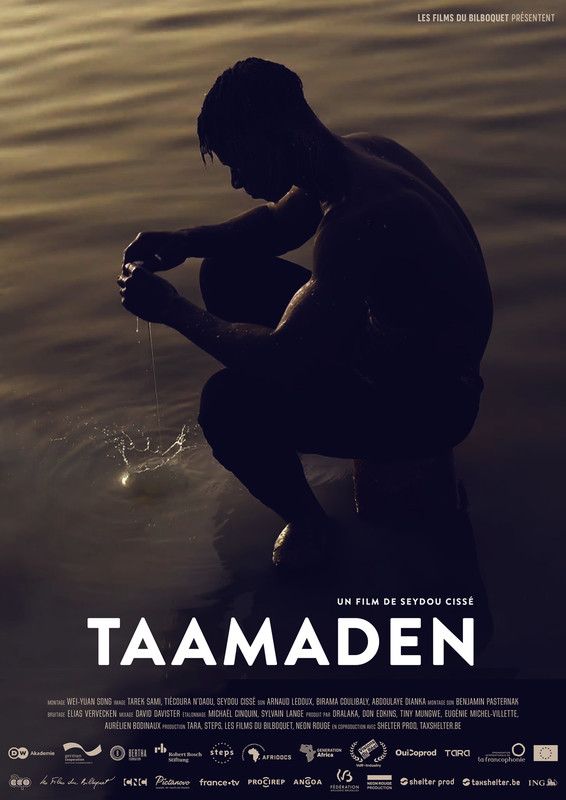
Tamaaden, produced in 2021, is a documentary film directed by Malian filmmaker Seydou Cissé, director of the short film Voyage Des Pierres (2012). Co-produced by Cameroonian production company Tara Group and French production company Les Films du Bilboquet, it features scenes shot primarily in Valencia and Bamako.
The film’s opening montage includes a long shot of the ocean, with a voiceover that sets the tone for the rest of the story. The words “Our grandparents left…Our parents left…Our younger brothers and sisters left…We will leave too” can be applied in multiple contexts: death, or migration.
With dialogues and narration deployed in French, Wolof and Spanish, Taamaden zooms in on two different worlds. At one end of the divide, we see Ouloulou, Balde and Doucoure, three West African immigrants who are struggling to get by and adapt to their new surroundings in Valencia, one of Sain’s most vibrant cities. They try their best to pick up the language, connect with the music and get used to the food, but more importantly, they frequently communicate (via telephone) with their marabouts, whom they believe were instrumental to their successful journey across the Mediterranean, and who recommend daily prayers and rituals for them to abide by.
At the other end is Bakary, a young man living in Bamako, who strongly desires to get into Europe. He has tried before and failed, but he believes that this time he will succeed if he religiously follows the instructions of his marabout. He makes regular sacrifices as directed, prays by the sea and frequently consults with his spiritual guide, hoping to find luck with the waters at his second time of asking.
Cissé’s documentary film examines the tendency of Africans to seek solace in religion and search for answers via multiple spiritual routes. Francophone Africa is largely permeated by Islam, but many of the people who live in these countries are still drawn to the more traditional modes of worship. Incantations, gris-gris and the mystic arts are still held dearly, only this time cowries have been replaced by smartphones, and technology is the new prayer mat.
Taamaden also explores the subject of immigration, which has generated several conversations over the decades. There have been scary reports concerning those who try to move via the seas and via the deserts, but these stories fail to deter young Africans who view Europe as a more fertile ground to nurture their dreams. They will do many things, and in fact anything, to switch from harmattan winds to snow, even at the cost of their lives.
The story is driven by the narrative voices of these four characters, whose attempts to make sense out of their lives are documented by the slow-paced edits of Korean filmmaker Wei Yuan Song, as well as the candid cinematography of French director Tarek Sami and Malian videographer Tiecoura N’Daou. Amidst several tracking and POV shots, we are able to gather insight on their day-to-day existence.
Taamaden tells a relevant story, but fails to elicit any strong emotions. Too many minutes pass by before the story gives audiences anything to care about, and the concept of African spirituality deserves a more interesting exposition than what obtains here. The purpose of documentation is achieved, but the film drags on for too long; it could have been twenty minutes shorter. It would also seem that Cissé couldn’t get his subjects to say enough, and because of that, the film is left lacking any real emotional core. Ultimately, the documentary, while tackling a story with real potential, ends up missing the mark.