Dismantling the Archive: The Memory of Butterflies
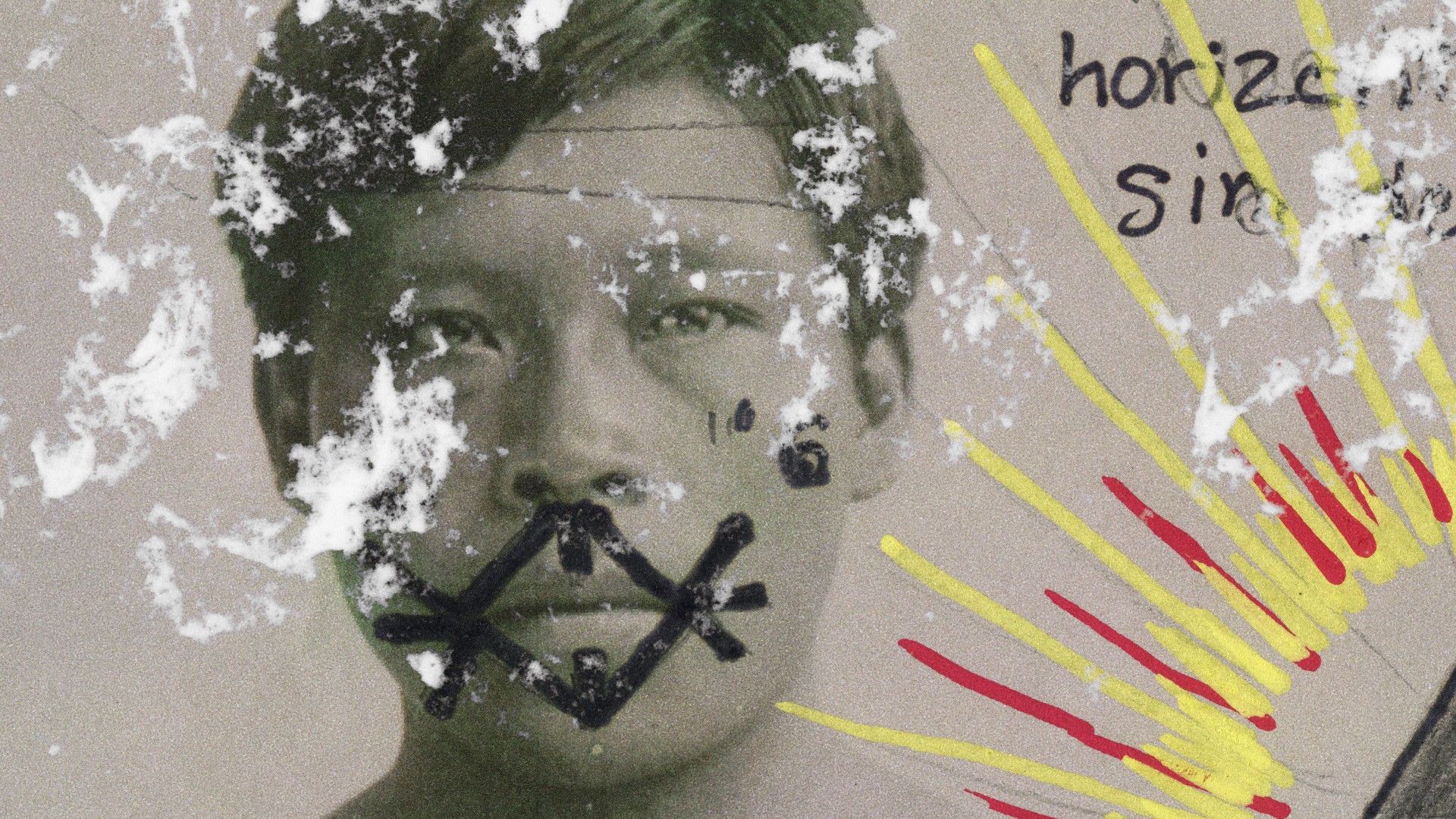
The Memory of Butterflies (La memoria de las mariposas, 2025) revolves around images of the unimaginable. What happens to the images that were never allowed to exist? Peruvian director Tatiana Fuentes starts with photographs taken in 1911 of two Indigenous youths, who were sent to London by the rubber plantation owner against their will to be ‘civilised.’ However, little can be found about their final whereabouts.
How can their thoughts and emotions be recovered? This is the initial question the director asked herself upon encountering the photos of Omarino and Aredomi. In The Memory of Butterflies, Fuentes reinvents the archive and uses it to imagine a future (or rather, a past) for the two protagonists. Their story is tied to the colonisation of the Amazon and the rubber extraction industry. It invites the viewer to engage in an intuitive exploration of the archive that emerges from a more emotional dimension.
With only two photographs of these Indigenous youths, one in indigenous clothing and the other in formal suits just before their departure for London, Fuentes begins to investigate what became of them. Based on the letters from the diplomat Roger Casement she constructed a narration about the arduous journey they endured on their way to Europe, the hardships they faced there, and their immense desire to return home. These letters, however, were far from all-encompassing, so the only way she could make sense of it all was by using images of other Indigenous people, in her words by ‘borrowing other bodies’, ones in which the ghosts of these two young Indigenous men might still dwell.
Through fragmented editing, the film compiles different types of archives that depict the exploitation of rubber in the Amazon—an industry of which Omarino and Aredomi were victims. The most important are what Fuentes calls ‘propaganda archives’, images produced by a colonial visual regime. This set of archives raises broader questions about the history of Peru and Colombia in relation to the horrors experienced during the times of the rubber plantations. Founded in 1903, ‘La Casa Arana’, where the two boys came from, was one of the most ‘successful’ companies in the Putumayo region. However, its operations were based on a regime of slavery in which Indigenous people were not only forced to work but also exposed to dire conditions, including plagues and famine.
In her voice-over, Tatiana Fuentes explicitly denounces the purpose for which these images were created and exposes their violent, colonial background. She emphasises that documentaries are never objective. While she uses the same archival images, she chooses to approach them critically, constructing a unique cinematic language. Her work highlights the necessity, as a documentarian, to deconstruct the archive and strip these images of the power they have historically held.
The director draws a threshold between the information the archive provides and the unknown, such as the question if they could return to their own land. She speaks of bringing forth the ghosts that inhabit these images and tracing Omarino and Aredomi’s presence within representations of Indigenous people and rubber plantations. The archive thus becomes a space of encounter with the dead. For Fuentes, cinema is an oracle, a way to grasp spectres and make sense of the hidden history of these two young men.
In this search, not only are bodies borrowed, but also voices. At a certain point, Tatiana’s voice fades. In its place, the voices of various Indigenous community members emerge, recorded especially for the film, opening a portal for speculation—imagining the different fates Omarino and Aredomi might have met. At that point, their images start to shape-shift: bright-coloured lines contrasting with the black and white, Indigenous garments and traditions drawn over their elegant suits.
Equally, the sound design serves to fill the gaps that cannot be resolved, helping the viewer imagine what happens between the fragments of the archive. It is a soundscape that immediately transports us to the Amazon rainforest: a dense landscape composed of the cracking wind and trees, the rain, and the humidity of the Amazon.
‘It is necessary to dream in order to know,’ says one of the voices. I couldn’t help but drift off as I watched a shot of the Putumayo River, lulled by the sounds of the jungle and the rain. I began slipping between dream and screen, merging both worlds in my mind. I embarked on this symbolic return, becoming part of the search myself.
I remember the shot of a canoe crossing the Putumayo River. Perhaps I was also joining Omarino and Aredomi’s return. When I opened my eyes, the credits were rolling: ‘A film by Tatiana Fuentes.’ As I slowly emerged from my reverie, I had no time to wonder about the ending or where the journey down the river had ultimately led.
In my dreams, Omarino and Aredomi returned to their land and that was enough.